
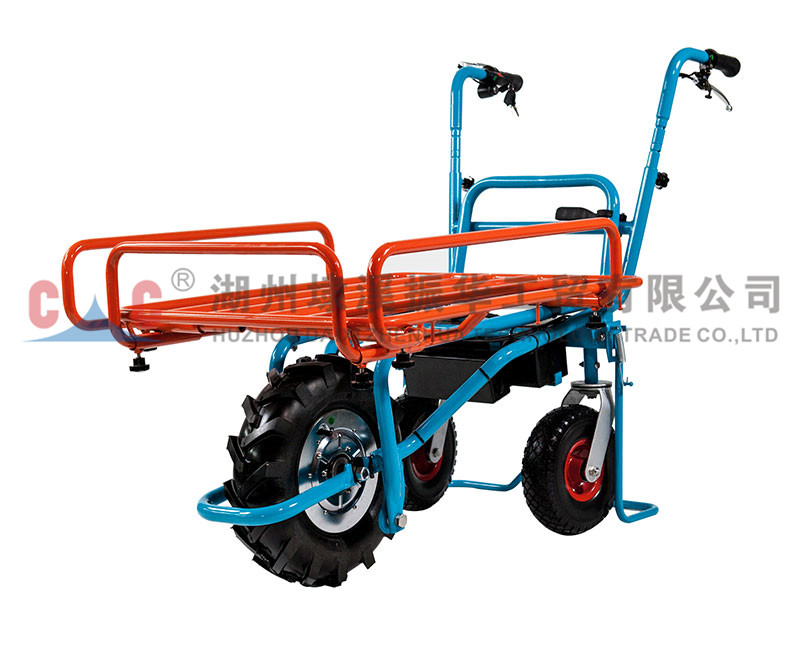
Electric Barrow
In the world of construction, landscaping, and heavy-duty gardening, efficiency and safety are paramount. The traditional wheelbarrow, a staple for centuries, is now being challenged by a powerful new contender: the Electric Barrow. This innovation promises to reduce physical strain and dramatically increase productivity. But is this modern tool a worthwhile investment, or just a gimmick? This comprehensive guide will delve into every critical aspect, from head-to-head comparisons and professional-grade features to core technology and maintenance, helping you decide if an Electric Barrow is the right choice for your needs.
The fundamental question for most potential buyers is how an electric model truly stacks up against its manual predecessor. The comparison goes far beyond simply adding a motor; it's about a fundamental shift in operational capability, cost-effectiveness, and user well-being. A manual barrow relies entirely on human power for both propulsion and lifting, limiting its capacity and endurance. In contrast, an Electric Barrow uses a motorized drive system to handle the heavy lifting, transforming the user's role from primary mover to operator. This section provides a quantitative and qualitative analysis to determine the real-world value proposition of upgrading.
When it comes to moving materials, the numbers speak for themselves. An Electric Barrow can typically carry loads between 200kg and 500kg, far exceeding the 70-100kg practical limit of a manual model. More importantly, it maintains this efficiency over an entire workday. Consider a scenario of moving soil from a driveway to a backyard 50 meters away. A user with a manual barrow might manage 15-20 trips per hour, while an electric model can easily complete 25-30 trips with significantly less fatigue. Over an 8-hour day, this translates to moving thousands of kilograms more material with a fraction of the physical effort.
The initial purchase price of an Electric Barrow is undoubtedly higher than a manual one. However, a true cost analysis must consider the Total Cost of Ownership (TCO). For professionals, this calculation is straightforward: time is money. The increased productivity means jobs can be completed faster, allowing for more projects to be taken on. For homeowners, the value is in saved time and reduced physical strain. Furthermore, while a manual barrow has few mechanical parts, an electric model's components (motor, battery, controller) are designed for durability and often come with extensive warranties. When factoring in the potential for reduced injury and long-term labor savings, the TCO of an electric model can be significantly lower over its lifespan.
One of the most compelling, yet often overlooked, benefits of an Electric Barrow is the dramatic reduction in physical strain. Pushing a heavy, manual wheelbarrow, especially up slopes or over uneven ground, is a leading cause of back strain, muscle pulls, and joint injuries among construction workers and serious gardeners. By automating the propulsion, the electric model minimizes the risk of repetitive stress injuries and acute accidents from losing control of a heavy load. This creates a safer working environment and contributes to the long-term health of the user, an invaluable benefit that cannot be quantified in dollars alone.
Not all Electric Barrow models are created equal. The demanding environment of a construction site requires a machine built to withstand abuse, handle heavy loads, and operate reliably in all weather conditions. Choosing the best electric barrow for construction means looking beyond marketing claims and focusing on key specifications that determine on-site performance and durability. This section serves as a contractor’s checklist, detailing the non-negotiable features that separate a professional-grade tool from a light-duty imposter.
On a busy construction site, failure is not an option. The primary specifications to scrutinize are load capacity, motor power, and build quality. A professional-grade barrow should have a minimum load capacity of 300kg, with many heavy-duty models reaching 500kg. The motor, measured in watts (W), should be powerful enough to handle steep inclines and rough terrain without stalling; look for at least 1000W. The chassis should be constructed from robust steel, not lightweight aluminum, to withstand drops and impacts. The battery's capacity, measured in ampere-hours (Ah), directly correlates to runtime; a higher Ah rating means more work can be done on a single charge.
A construction site is rarely a flat, smooth surface. Maneuverability is therefore critical. Features like a differential lock, which powers both wheels equally for maximum traction on mud or gravel, are essential. The type of tire is also crucial; pneumatic tires offer better cushioning but can be punctured, while solid or foam-filled puncture-proof tires provide peace of mind. A tight turning radius is vital for navigating around scaffolding and through doorways. Some advanced models even offer four-wheel drive and skid-steer capabilities for ultimate control in the most challenging environments.
Before making a purchase, a thorough inspection of build quality is wise. Check for clean, strong welds on the steel frame. The motor and battery housing should have a high Ingress Protection (IP) rating, such as IP54 or higher, to protect against dust and water jets. Look for high-quality bearings in the wheels and a simple, accessible design for cleaning and maintenance. A reliable Electric Barrow is an investment, and choosing one built to last will pay dividends in reduced downtime and repair costs over the years.
For anyone moving loose materials like soil, sand, gravel, or concrete, the act of unloading is a significant part of the workload. This is where an electric powered barrow with tipper function becomes a true game-changer. Instead of manually lifting and tilting a heavy load, the user can activate a mechanism that effortlessly dumps the contents. This feature not only saves immense amounts of time and energy but also enhances safety by reducing the risk of back injuries associated with manual unloading. It transforms the barrow from a simple transport device into a highly efficient material handling system.
Imagine filling a barrow with wet concrete and having to lift it to pour into a formwork, or moving a full load of topsoil to a garden bed. The physical exertion required is substantial. A tipper function automates this final, often most strenuous, step. With the simple pull of a lever or push of a button, the load is deposited precisely where it's needed. This is not just a convenience; for professionals doing this dozens of times a day, it is a critical feature that boosts productivity and protects their physical health, making it an almost essential feature for serious work.
There are two main types of tipper mechanisms available, each with its own advantages. A hydraulic tipper uses a fluid-driven cylinder to lift the bed, offering smooth, effortless operation even with the maximum load. It is the premium option, often found on heavy-duty models. A mechanical tipper, on the other hand, typically uses a gas strut or a lever-based system. While it requires some manual effort to initiate the dump, it is generally simpler, lighter, and less expensive. The choice depends on your budget and the typical weight of the loads you handle.
| Feature | Hydraulic Tipper | Mechanical Tipper |
| Effort Required | Minimal (push-button) | Low to Moderate (lever/pull) |
| Cost | Higher | Lower |
| Complexity | More complex, requires maintenance | Simple, highly reliable |
| Best For | Maximum loads, frequent dumping | Budget-conscious users, moderate loads |
The utility of a tipper function extends far beyond the construction site. In landscaping, it's perfect for distributing mulch or soil across flower beds. On a farm, it can be used to feed livestock or spread bedding. For equestrian centers, it's invaluable for mucking out stables and moving shavings. Any task that involves moving and depositing a loose, heavy load becomes significantly more efficient with a Electric Barrow equipped with a tipper, making it one of the most versatile tools a property owner can own.
The benefits of an Electric Barrow are not confined to commercial job sites. Serious homeowners, large-scale gardeners, and smallholders face many of the same challenges, just on a smaller scale. They need a tool that is powerful enough to handle heavy loads of soil, compost, or paving stones, but is also user-friendly and maneuverable in the tighter spaces of a garden. This is where a heavy duty electric garden barrow fills the perfect niche, offering professional-grade power in a more accessible package.
In a garden context, ""heavy duty"" means the ability to handle tasks that would overwhelm a standard wheelbarrow. This includes moving multiple bags of compost or topsoil in one go, transporting heavy planters, or shifting a pile of gravel for a new path. For these tasks, a load capacity of 150kg to 250kg is usually sufficient. The key is to find a model that balances this power with a form factor that isn't too large or cumbersome for navigating through garden gates and along narrow paths.
While power is important, usability is paramount for the home user. Look for features that make the Electric Barrow easy and safe to operate. A simple, intuitive control system—typically a thumb throttle on the handlebar—is essential. A dead-man's switch that stops the motor immediately when the handle is released is a critical safety feature. Consider the overall weight of the machine; while it's heavy-duty, it should still be light enough that one or two people can lift it over a step or curb if needed.
The garden environment presents unique challenges. A model with a good turning radius and perhaps a reverse gear will be much easier to handle. Tire choice is also a consideration; while wide, aggressive-tread tires offer great traction, narrower tires may be better for not compacting lawns and garden beds. The best heavy duty electric garden barrow is one that provides the muscle to do the hard work without sacrificing the agility needed to navigate the delicate and often confined spaces of a residential landscape.
The battery is the heart of any Electric Barrow, and understanding its performance is crucial for managing expectations and ensuring the tool is always ready when you are. Questions about runtime, charging times, and overall battery lifespan are among the most common concerns for potential buyers. A deep dive into electric barrow battery life and charging reveals that not all batteries are created equal, and how you treat them has a huge impact on their longevity and reliability.
Manufacturers often provide an estimated runtime, but this is usually based on ideal conditions. Real-world runtime depends heavily on several factors: the weight of the load, the steepness of the terrain, and even the ambient temperature. A 40Ah battery might last for 8 hours when moving light loads on flat ground but only 2-3 hours when hauling 300kg up a 15-degree incline. When comparing models, look for the battery's Ampere-hour (Ah) rating as a starting point, but also seek out independent reviews or user testimonials for more realistic performance figures.
Most modern Electric Barrow models use Lithium-ion (Li-ion) batteries, but some budget options may still use sealed lead-acid (SLA) batteries. The difference is significant. Li-ion batteries are much lighter for the same capacity, charge much faster, have no ""memory effect"" (so they can be partially charged without damage), and offer a longer overall lifespan. SLA batteries are cheaper but are very heavy, take a long time to charge, and have a shorter usable life. For any serious use, Li-ion is the superior technology.
| Characteristic | Lithium-ion (Li-ion) | Sealed Lead-Acid (SLA) |
| Weight | Light and compact | Very heavy and bulky |
| Charging Time | Fast (2-5 hours) | Slow (8-12 hours) |
| Lifespan (Charge Cycles) | High (800-2000+) | Lower (200-400) |
| Maintenance | Maintenance-free | Requires careful charging |
To get the most out of your investment, proper battery care is essential. Always use the charger supplied by the manufacturer. It's best to charge the battery after each use, avoiding letting it fully discharge to 0%. Store the battery in a cool, dry place, and if you plan to store the barrow for several months, charge the battery to about 50% first. Following these simple guidelines will help ensure your Electric Barrow's battery remains healthy and provides reliable power for years to come.
Yes, most quality Electric Barrow models are designed to be used in wet weather. The key specification to look for is the IP (Ingress Protection) rating of the motor and electrical components. A rating of IP54 means the unit is protected against dust ingress and water splashes from any direction, making it suitable for use in the rain. However, it is always advisable to avoid submerging the machine in deep water and to wipe it down and store it in a dry place after use to prevent corrosion and ensure longevity.
Warranties for an Electric Barrow typically vary by manufacturer and model but generally cover different components for different periods. The frame and chassis might have a longer warranty, such as 3 to 5 years, reflecting their durability. The motor and controller are often covered for 2 years. The battery, being a consumable component with a finite lifespan, usually has a shorter warranty, typically 1 to 2 years or a certain number of charge cycles. Always read the warranty terms carefully before purchasing to understand what is covered and for how long.
No, maintaining an Electric Barrow is generally straightforward and requires less effort than maintaining a gasoline-powered engine. The primary maintenance tasks are simple: keep the unit clean, especially after use in mud or dust; regularly check tire pressure; and ensure all bolts and fasteners are tight. The main ongoing maintenance is proper battery care. Unlike a gas engine, there are no spark plugs, oil changes, or air filters to deal with, making them a very low-maintenance option for power-assisted hauling.
The pulling capacity of an Electric Barrow up a hill depends on two main factors: the motor's power (torque) and the steepness of the incline. A powerful model with a 1000W+ motor can typically pull its maximum load capacity (e.g., 300-400kg) up a moderate slope of around 10-15 degrees. For steeper inclines, the effective carrying capacity will be reduced. Models equipped with a differential lock or four-wheel drive will perform significantly better on slopes and slippery surfaces as they provide more traction to both wheels. Always check the manufacturer's specifications for maximum gradeability.
Search
Search for products that you are interested in.
Company

 Privacy